Tuesday, 14 July 2009

Brüno

You may think that, as a classics-obsessed, Dante-touting publisher, I might have a problem forking out a tenner to go and see Sacha Baron Cohen’s latest movie. You are absolutely right. Let’s put this straight: not even wild horses could drag me, in normal circumstances, to an Odeon cinema on a Sunday night. Give me Kanye West and Lady Gaga any time, but please don’t ask me to sit among a horde of popcorn-crunching, Pepsi-Cola slurping eighteen- and nineteen-year-olds and be subjected to the humiliation of watching a film like Brüno.

Having said that, a couple of friends invited me and Elisabetta to the cinema, and we happily obliged – it would have been rude to say no.

I had heard that the film trespassed a few boundaries, but to see the younger generation (sigh!) gulping down the breaking of every imaginable taboo and laughing heartily at it was as much of a shock to me as the movie itself. My first thought was that I must be getting old at twice the rate as a couple of years ago.

I’ll openly admit that I didn’t think it was completely crap, and also that I laughed out loud at some of the clownish bits, but I think good satire should remain above its subject, and I felt that Brüno was always, consistently, well below good taste. So it gets my thumbs-down, for what it's worth.

AG

Thursday, 9 July 2009

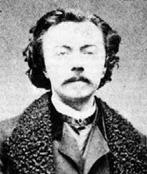
Villiers de l'Isle-Adam


Of the many unfortunately neglected French writers in the English-speaking world these days, I’d like to highlight Villiers de l’Isle-Adam (full name Jean-Marie-Mathias-Philippe-Auguste, comte de Villiers de l'Isle-Adam!), whose works have been translated on various occasions, but are now out of print.

Born in Brittany in 1840 into a declining aristocratic family (their already depleted fortune underwent even more strain due to his father’s costly efforts to find the long-lost treasure of his ancestor, who was a Knight-Hospitaller), he moved to Paris at the age of twenty, where he pursued a bohemian existence and gradually began to mingle with literary idols such as Charles Baudelaire, Leconte de Lisle and Théophile Gautier. In the following years he wrote verse and drama, which he contributed to various or journals or published at his own expense, without great success. In 1870, after having to return to France after a visit to Weimar to meet Wagner, because of the beginning of the Franco-Prussian War, he briefly joined the army. As his finances were constantly dwindling, a situation which worsened when his benefactress Mlle de Kérinou died in 1871, he attempted various schemes to improve his lot – such as trying to obtain an attaché position at the French Embassy in London, asking a rich English heiress, Anna Eyre Powell, to marry him or desperately pushing to have one of his plays performed – all of which failed.

His literary breakthrough came relatively late in his life, when his collection of short stories, Cruel Tales, was published in 1883 and came to prominence when it was recommended in his friend Joris-Karl Huysmans’s influential decadent novel Against Nature in 1884. Praised by, among others, Stéphane Mallarmé, the tales were an original mixture of timely satire, the supernatural and tragic pathos, notable for the author’s elegant and at times poignant writing style. It is today by far the most widely read of his works.

Three years later, a second major work L’Ève Future (Tomorrow’s Eve) was finally published in full, after its initial serialization had been cut short in 1881. Influenced by modern advances in science, Tomorrow’s Eve was a fascinating and groundbreaking example of early science fiction, in which a fictionalized Thomas Edison creates a female “android” (the term itself is coined in the novel) at the behest of his friend Lord Ewald, only for events of a mystical and supernatural nature to occur.

The play Axël, which is considered his third major work – and which Villiers de l’Isle-Adam himself considered to be his crowning achievement – appeared posthumously in 1890. It is a drama in the Romantic tradition, highly influenced by the likes of Goethe and Wagner, in which Axël, the young lord of Auërsperg, falls in love with Sara, a nun who has escaped her convent and sought refuge in his family vault. The play ends tragically after they realize the ideal love they are after cannot be achieved in the real world and they find that suicide is the only solution.

Wednesday, 8 July 2009

Art of Sinking in Poetry - The Observer

Delighted to see the excellent review of Pope's The Art of Sinking in Poetry in the Observer on Sunday. For the second time in a row, they got the publisher wrong . . . the trouble is that Oneworld Classics and Oxford World Classics are not that far from each other, and they are both abbreviated OWC.

Never mind. As you know, it's one of my pet projects (see here for an old post about this book), and I hope to see more reviews of it soon.

AG

Tuesday, 7 July 2009

Memoirs of an Unborn Celebrity Kiddo, or My life in the Belly

Do you remember those days when memoirs and autobiographies were written by some grand dame or old artist at the end of a long, active, adventurous life? Do you remember Casanova’s monumental Histoire de ma vie, or Cellini’s Vita scritta da lui medesimo?

Well, that time is no more. I am not sure whether this is a reflection of our ageophobic society, but if you go into any bookshop or supermarket you’ll be submerged – as I am sure you have noticed – by a mass of ephemeral celebrity autobiographies. What is depressing about this is not only the poor quality of the writing, which is sometimes due to the fact that they are really written by the celebrities in question, but also the young age of some of the people involved.

Take David Beckham for example: he’s only thirty-four and he’s got already four or five autobiographies under his belt, the first one written over ten years ago. Obviously a lot must be happening in his life outside the pitch. Lewis Hamilton wrote his autobiography, My Story, when he was twenty-two. Four fifths of it, I imagine, must be devoted to him whizzing around a circuit on a racing car. When Andy Murray’s Hitting Back autobiography came out in June last year – in time for Wimbledon of course – he had just celebrated his twenty-first birthday. Good old Andy has a new autobiography coming out in November this year, ominously titled Coming of Age. Let’s hope he doesn’t flop again.

But this is nothing. You must have come across Miley Cyrus’s 272-page Miles to Go (at least some irony in the title!), which was published in March this year, well before the young singer’s sixteenth birthday. And what about Transworld’s recent publishing coup? They bought – for big money, no doubt – world English rights in the life story of Rubina Ali, the young star of Slumdog Millionaire, inventively titled Slumgirl Dreaming. Her age? She’s nine. I am sure she’ll have a lot to tell the world.

But I think publishers are missing a trick here. They should try and secure the rights in the life story of unborn celebrity babies. As soon as these babies are able to write, or talk – or even before birth, if they can detect their brainwaves with one of these new mind-reading machines – they could fill a 300-page autobiography detailing what goes on in the belly of a celebrity mum. Just a thought. I am sure there’s a big market out there for this sort of thing.

AG

Monday, 6 July 2009

Knighted

Not me, but Elisabetta. And not by Queen Elizabeth II, but by M. Sarkozy.

Congratulations to Elisabetta for being awarded the prestigious title of Chevalier des arts et des lettres by the French government for her services to French literature.

Now back to work, lady!

AG

Saturday, 4 July 2009

Chicken publishing

By that I mean "lily-livered publishing" or "white-feather publishing".

Okay, these are hard times for the Man o' the Press, when even well-established Erotica publishing programmes are put on hold, but I think this is exactly the time to get more adventurous rather than entrench in more and more of the same gutless pap.

It is the chronic lack of ambition and the increasing copy-cat, series-based nature of most of what is published today – not only in terms of contents but also in terms of cover and packaging – that is driving the world of publishing (and with it writers, agents and booksellers) towards the abyss, not the heavy discounting or the ailing chains. We need something fresh, something new: we need to reinvent the wheel.

Instead, what we get is publishers bidding over Vikram Seth's sequel to A Suitable Boy – to be entitled, guess what, A Suitable Girl (to be published in Autumn 2013), and to be followed no doubt by A Suitable Mum, A Suitable Dad, A Suitable Granny etc. etc. in due course. The lucky bidder is rumoured to have offered something in the region of £1.7m, which means that the publisher either sees this as a giant loss leader or expects to sell a couple of million copies – probably the latter. "That's a gamble," I hear you say, "and it's far from being a safe bet – you are contradicting yourself." Well, maybe. But my idea of risk is slightly different, and I only see this as a reflection of our wasteful, celebrity-driven society.

AG

Wednesday, 1 July 2009

Vulture Publishing

This is not the name of a new imprint, but a tentative description of the UK publishing scene.

The King of Pop's demise – may his bald, scarred, skeletal body rest in peace – has encouraged a commissioning spree among some of our most valiant publishers.

John Blake was the first one to lay down his cards and make the bold move – due to trade and popular demand – of rushing out a half-baked biography of Michael Jackson (less than two months between commissioning and release, i.e. an instant biography). He was immediately followed by a busy bandwagon of brave publishers, including – among others – Michael O'Mara, Carlton and Montreal-based Transit Media, whose book – supposed to tie in with the popstar's London concerts – is undergoing "a frantic rewrite".

And Headline, one of the big guys, is today "entering the Jackson race" with a brand new book, and planning an initial print run of – wait for it – 175,000 copies.

What's going on, I wonder? Have we all gone mad? Are these heatwave-induced decisions? Publicity stunts? Isn't there a more responsible way to use paper? No doubt some of these books will crop up in the Top 50 chart, but what is the point of all this? Can somebody tell me? Please?

AG